Delivering transformation when it wasn't technically possible.
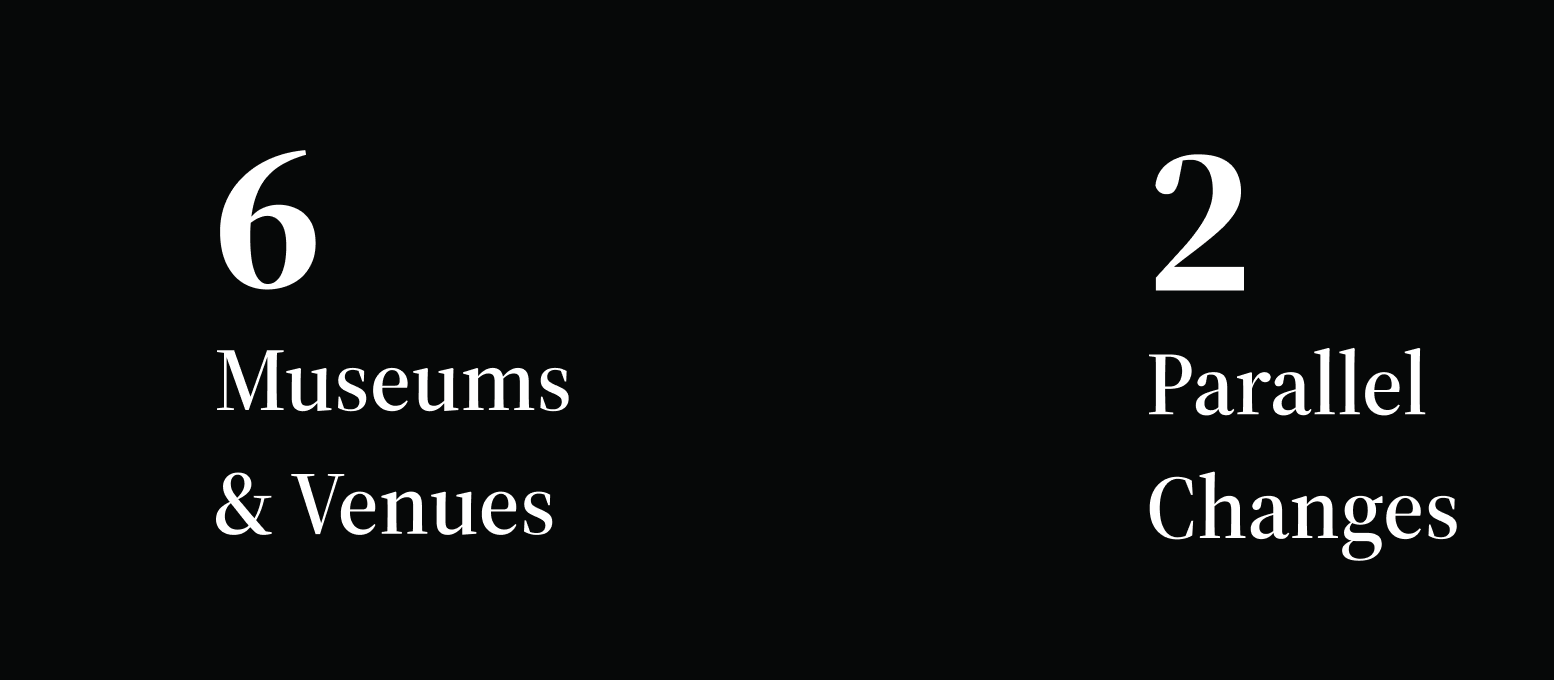
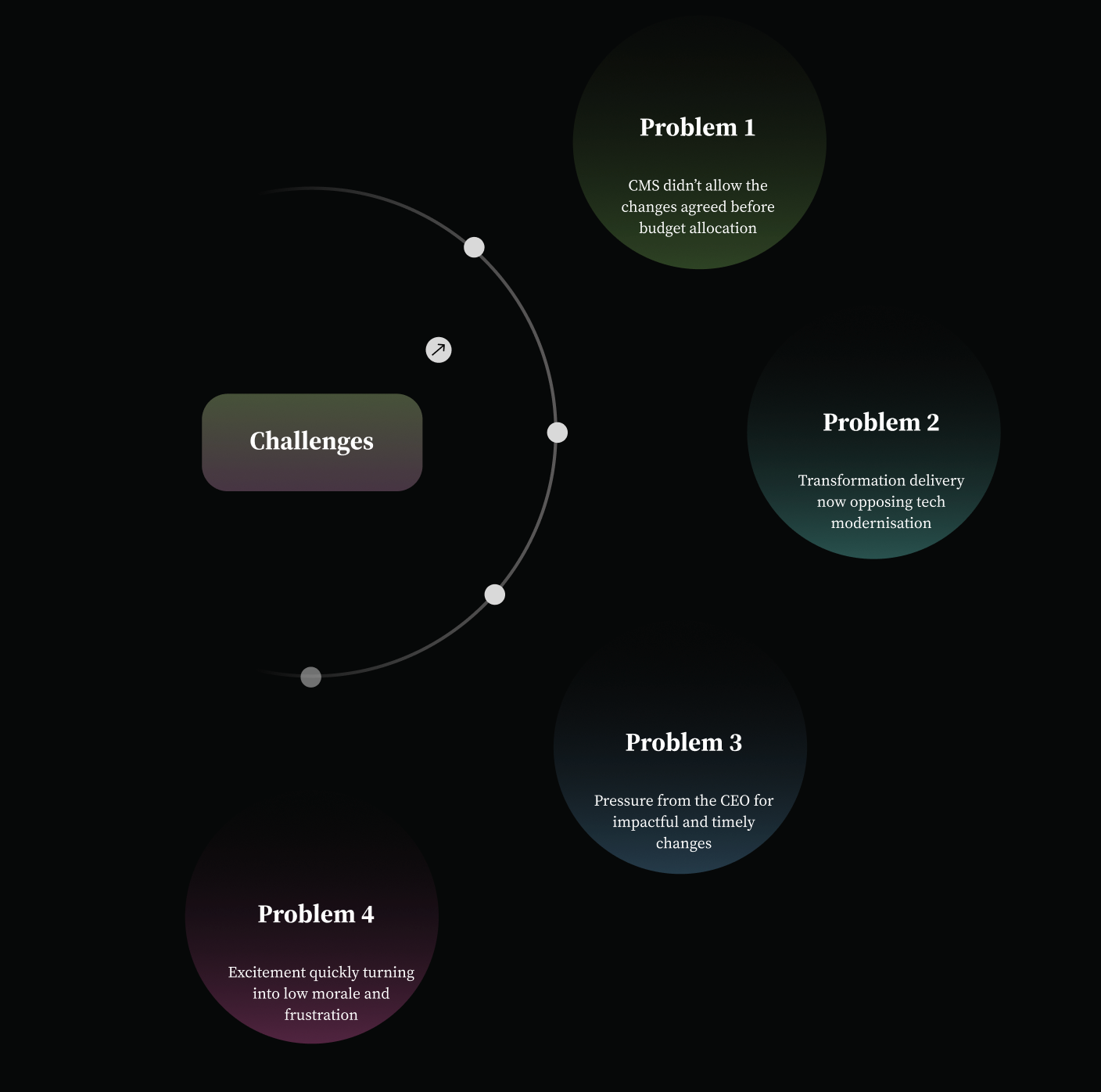
Leadership had secured funding to transform Museums Victoria's digital experience. Not long after the programme started, it became clear the technology behind it couldn't support what had already been promised.
Instead of picking between delaying the transformation or scaling back the vision, I helped shape a two-horizon approach: real improvements delivered now, on the platform that existed, alongside a research-led path toward what the organisation could build next.
Instead of picking between delaying the transformation or scaling back the vision, I helped shape a two-horizon approach: real improvements delivered now, on the platform that existed, alongside a research-led path toward what the organisation could build next.
Reframing the Programme
Rather than treat it as a choice between transformation and technical remediation, I proposed splitting the work into two connected horizons: one focused on measurable value within the existing platform's real limits, the other defining the future visitor experience the organisation could grow into as new capability came online.
It gave technology, design and leadership a shared direction to work toward, instead of three groups defending three different positions.
Horizon one — delivering value now
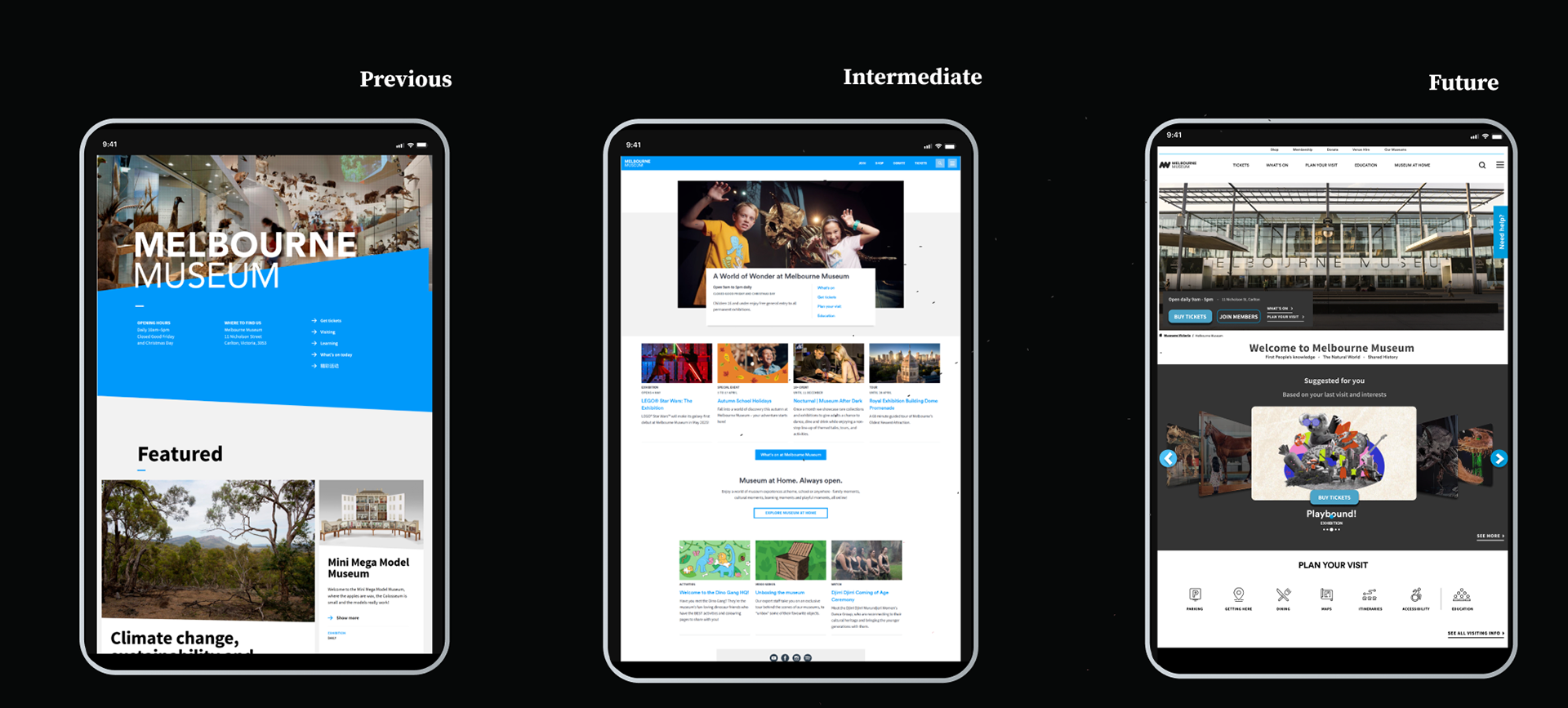
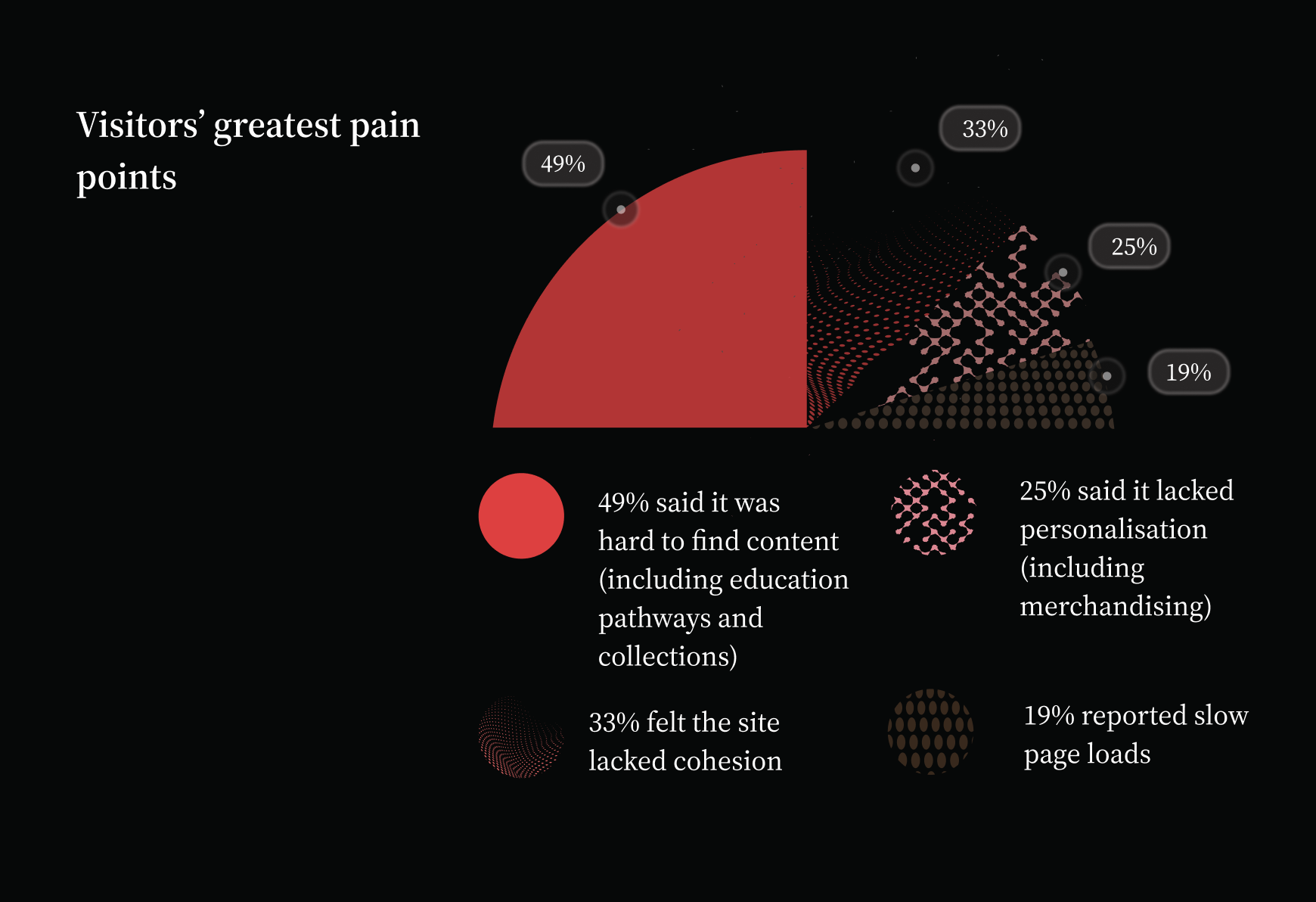
Rather than a full redesign, we focused on what would create the most value for visitors and the organisation inside the existing technology. Working with leadership, product and engineering, we prioritised initiatives tied to genuine need rather than surface polish:
- making the collections significantly easier to discover
- connecting members to exclusive digital experiences, lifting the value of a membership
- redesigning educator and school-excursion pathways around how teachers actually search and plan visits
- improving accessibility and navigation without a full platform rebuildpoints.
Horizon two — designing the future visitor relationship
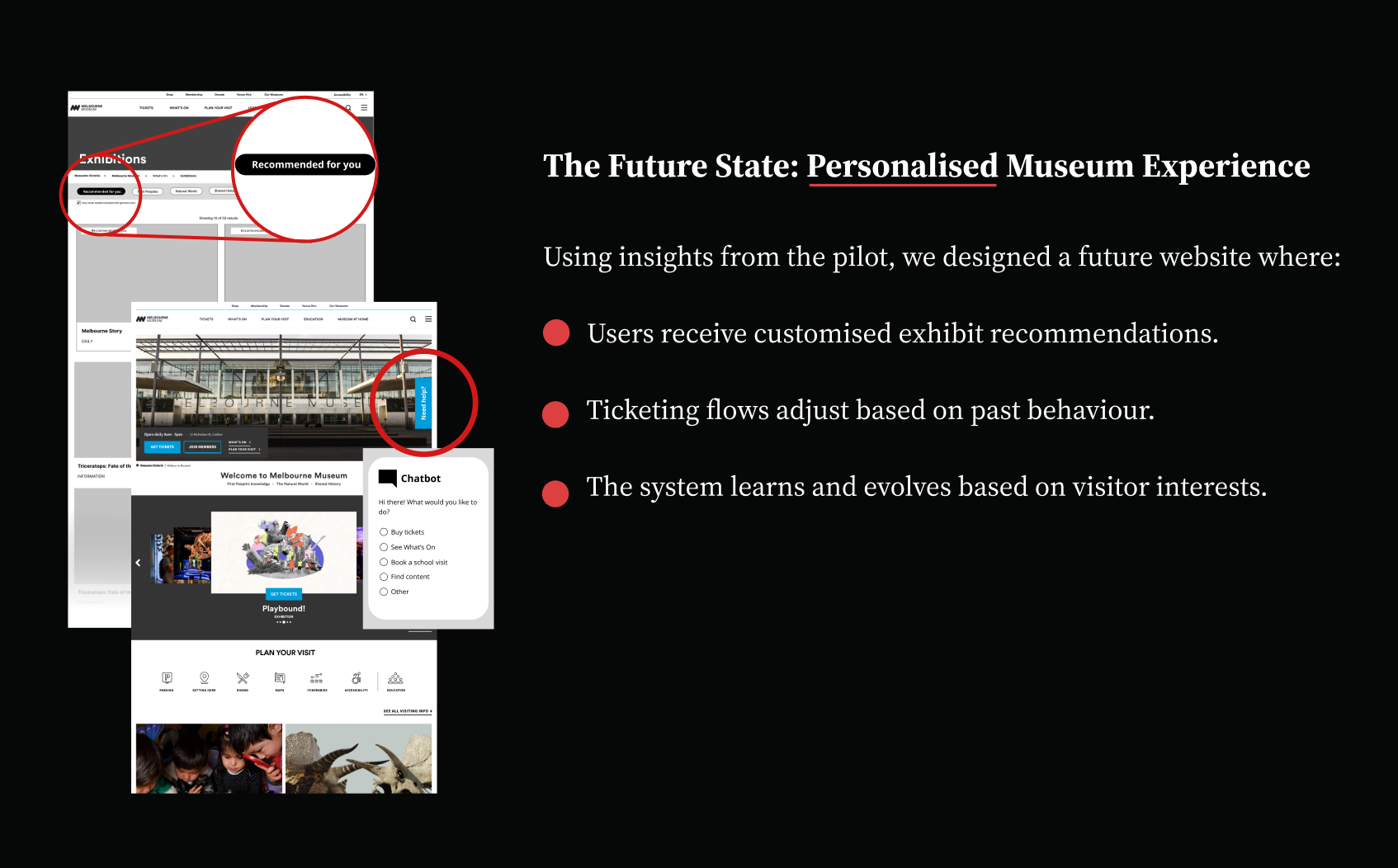
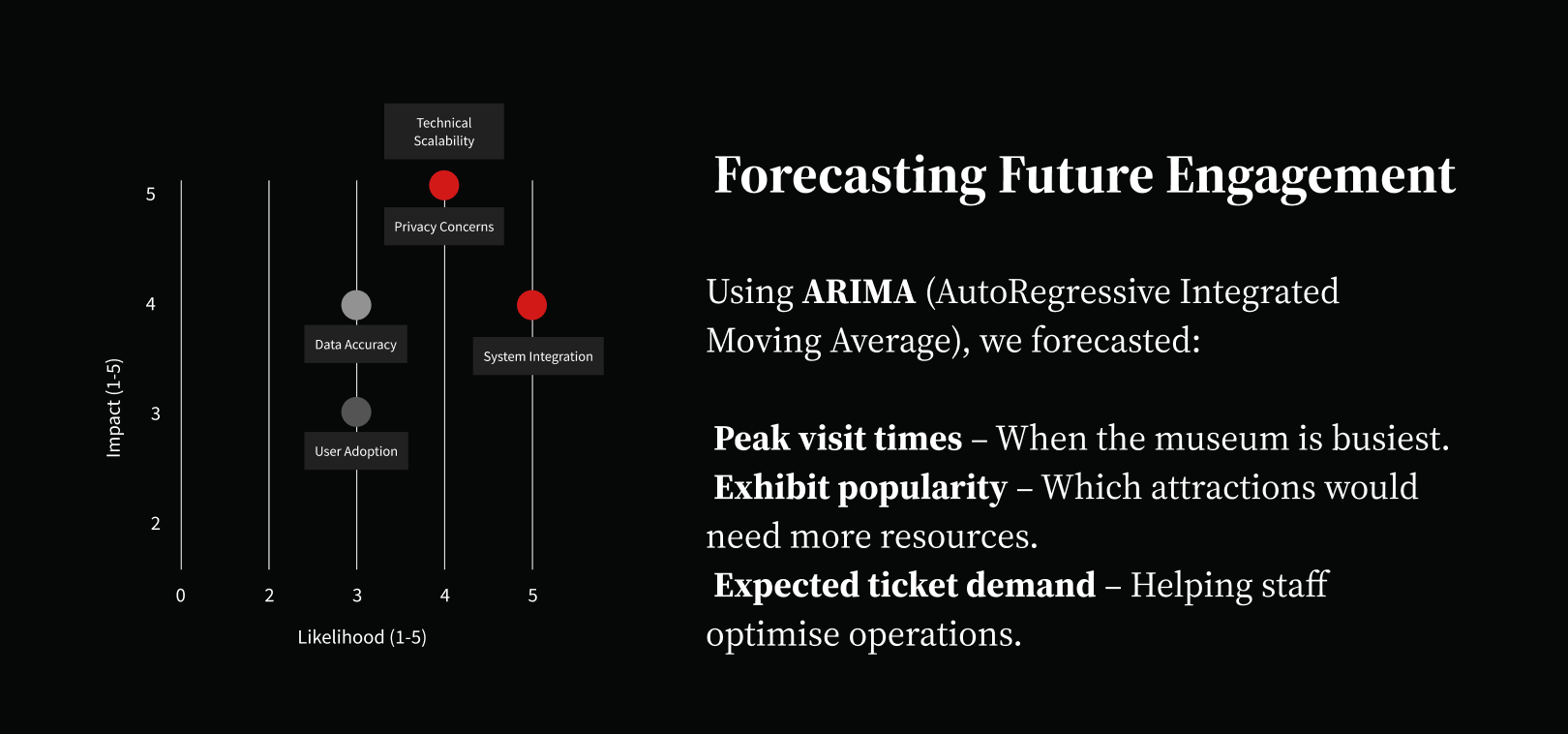
If Horizon one improved today, Horizon two asked what Museums Victoria could become. Research kept pointing to something specific: visitors developed many of their strongest interests during a visit, not before it. That raised a different question — could a museum remember what caught someone's attention, and pick that thread back up once they were home?
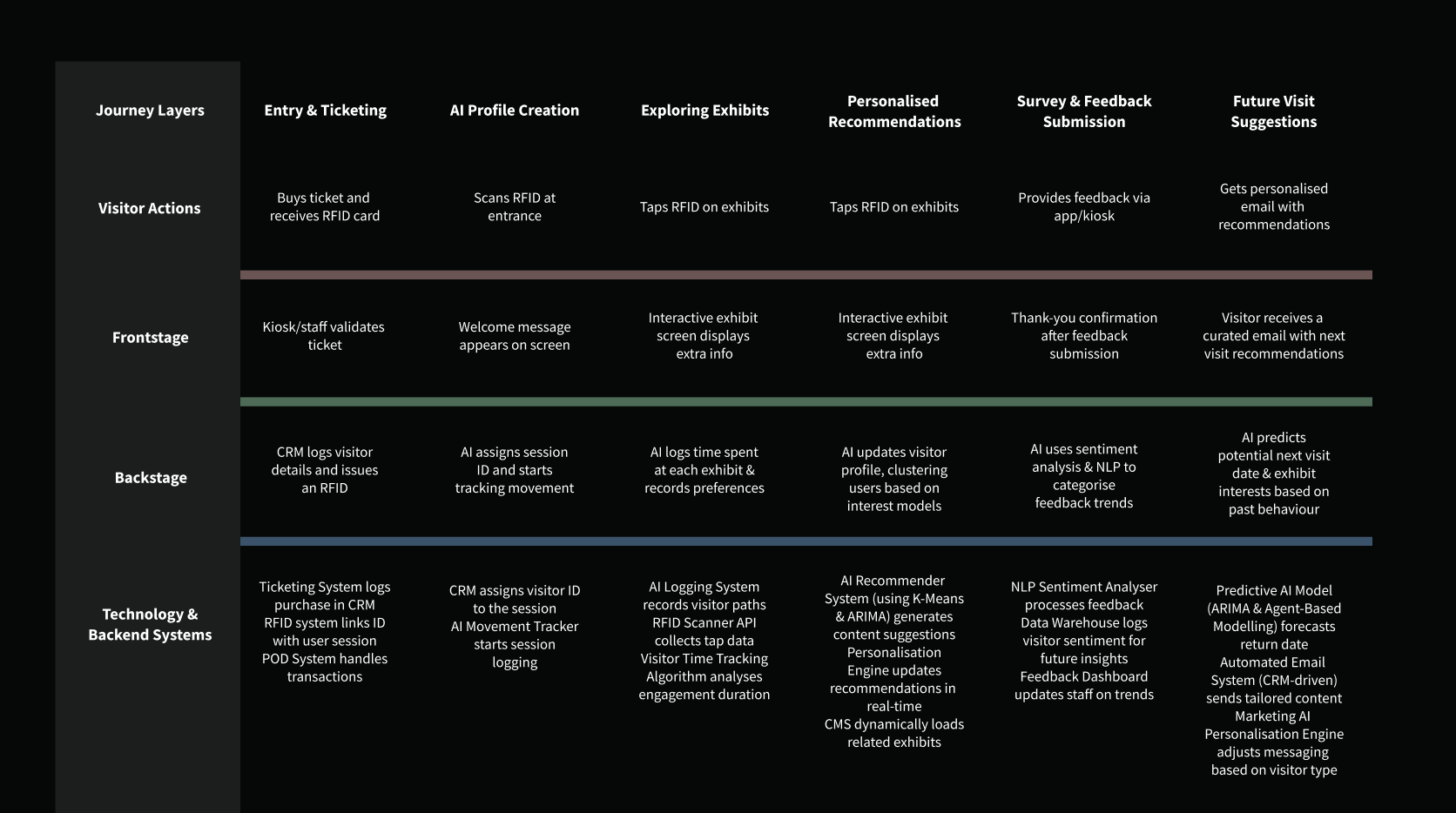
Working across service design, product strategy and emerging technology, I developed future-state concepts linking physical and digital experience through visitor identity, personalised content and recommendations.
Working across service design, product strategy and emerging technology, I developed future-state concepts linking physical and digital experience through visitor identity, personalised content and recommendations.
Exploring continuous engagement
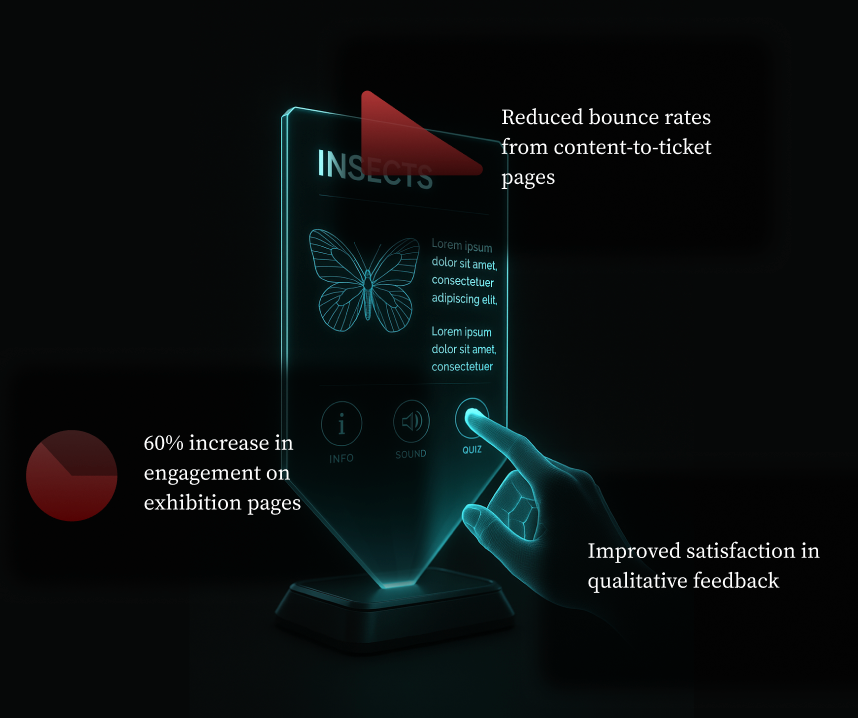
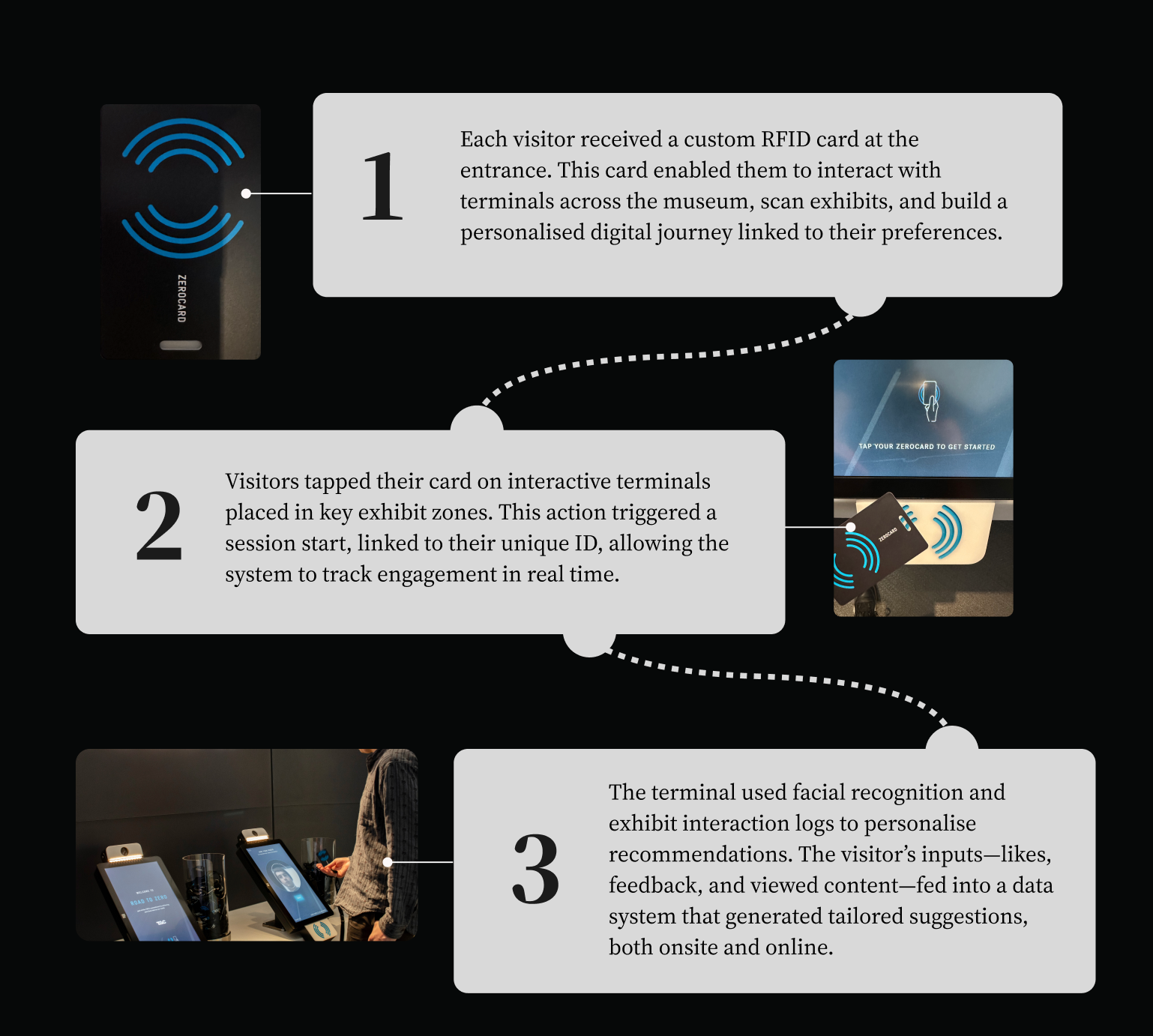
One concept used RFID-enabled interactions inside exhibitions — visitors could save objects, galleries or stories that caught their interest during a visit, and those choices became the basis for personalised recommendations once they came back online.
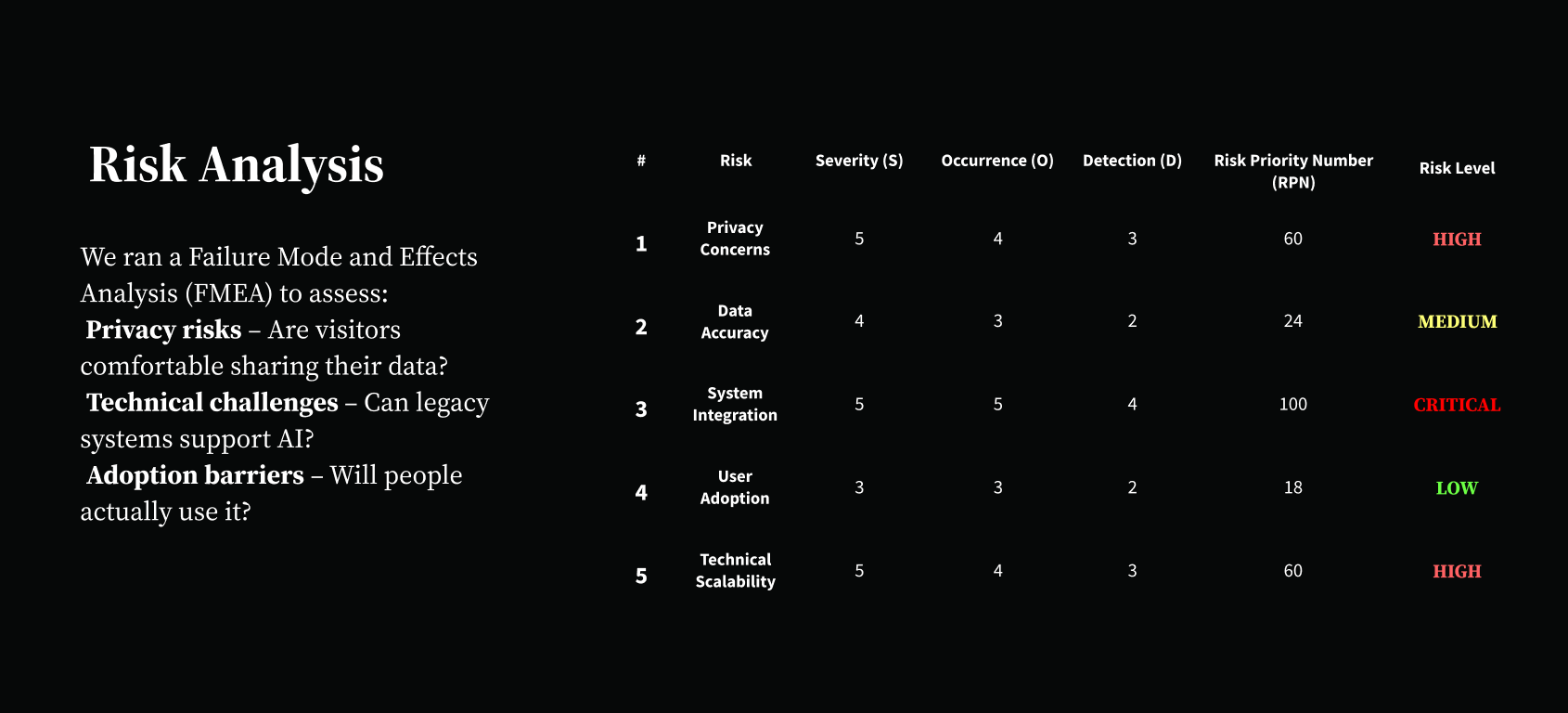
The RFID (currently used at the “Road to Zero” exhibition) itself wasn't really the point. What mattered was creating continuity between a moment of curiosity in a gallery and whatever came next online — and it opened up real questions about trust, consent and how much a cultural institution should let AI shape a visitor's experience.
The RFID (currently used at the “Road to Zero” exhibition) itself wasn't really the point. What mattered was creating continuity between a moment of curiosity in a gallery and whatever came next online — and it opened up real questions about trust, consent and how much a cultural institution should let AI shape a visitor's experience.
From research to delivery
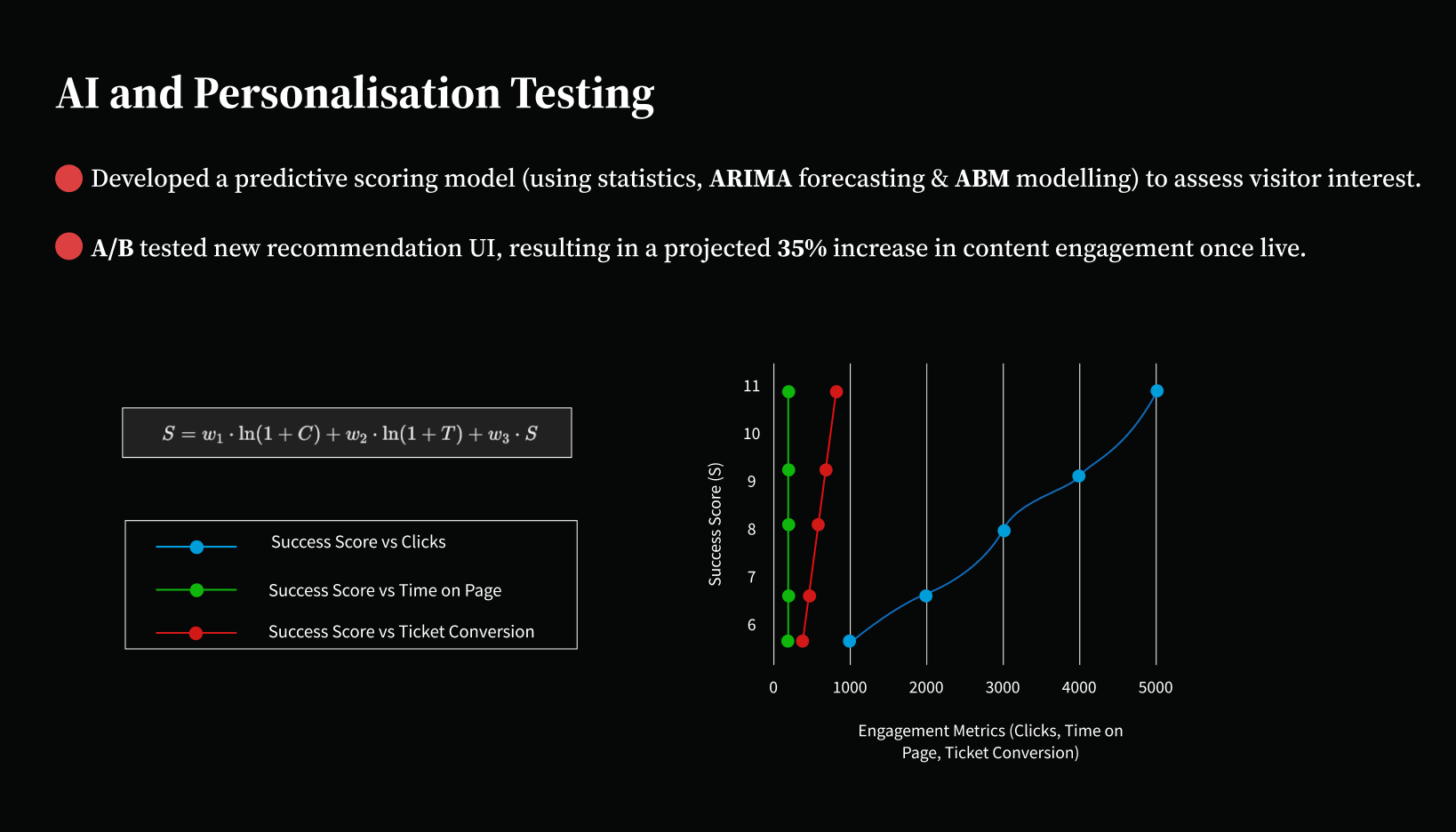
Across the programme, I worked between research, product, technology, marketing and senior leadership to keep day-to-day delivery decisions connected to the longer-term strategy — turning research into product direction, service models, future-state concepts, design-system foundations, delivery pathways and investment conversations, rather than a stack of separate artefacts.
What changed
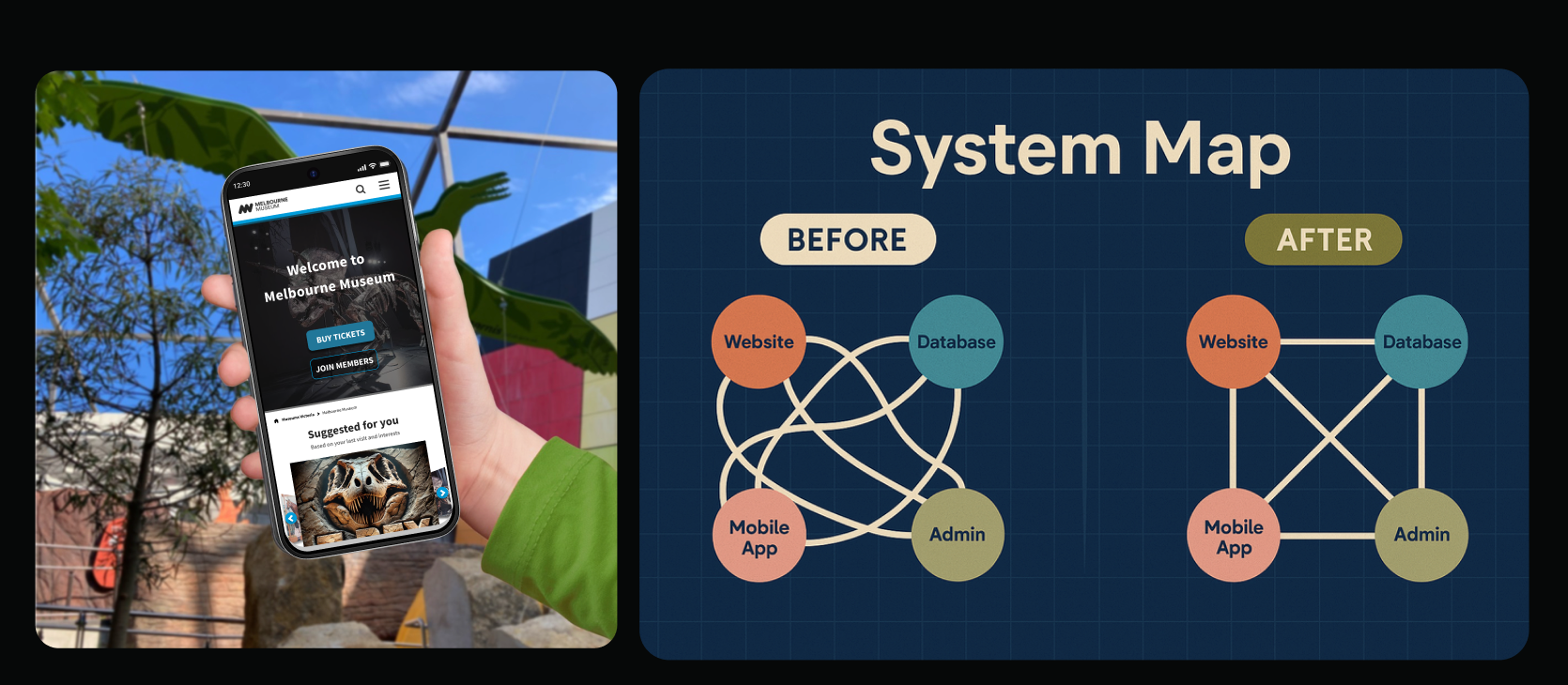
The programme gave the organisation a workable path between what the platform could do today and what it wanted to become — improvements delivered without waiting on a full rebuild, technology and leadership working from one roadmap instead of two, investment decisions grounded in visitor research rather than assumption, and real foundations for a more connected physical-and-digital experience.
Reflection
When I joined Museums Victoria, I thought the job was designing a better website. It wasn't.
The real work was helping an organisation keep moving toward something ambitious, after the plan everyone had agreed to turned out to be technically impossible — without pretending the constraints weren't real, and without asking people to just accept a smaller version of what they'd been promised.
Getting there meant sitting inside genuine conflict between people who each had good reasons for their position, and finding a path that respected both, rather than declaring one side right.
That's shaped how I approach transformation work since: understand the constraint honestly, find where real value can be delivered inside it, and use evidence — not authority — to make the case for where to go next.
The real work was helping an organisation keep moving toward something ambitious, after the plan everyone had agreed to turned out to be technically impossible — without pretending the constraints weren't real, and without asking people to just accept a smaller version of what they'd been promised.
Getting there meant sitting inside genuine conflict between people who each had good reasons for their position, and finding a path that respected both, rather than declaring one side right.
That's shaped how I approach transformation work since: understand the constraint honestly, find where real value can be delivered inside it, and use evidence — not authority — to make the case for where to go next.