
Helping a complex organisation deliver one participant experience.
What initially appeared to be a communications problem turned out to be an organisational alignment challenge. This case explores how I developed a shared planning tool that helped coordinate work across one of Australia's most complex public service transformations.
THE CHALLENGE
A communications problem that wasn't
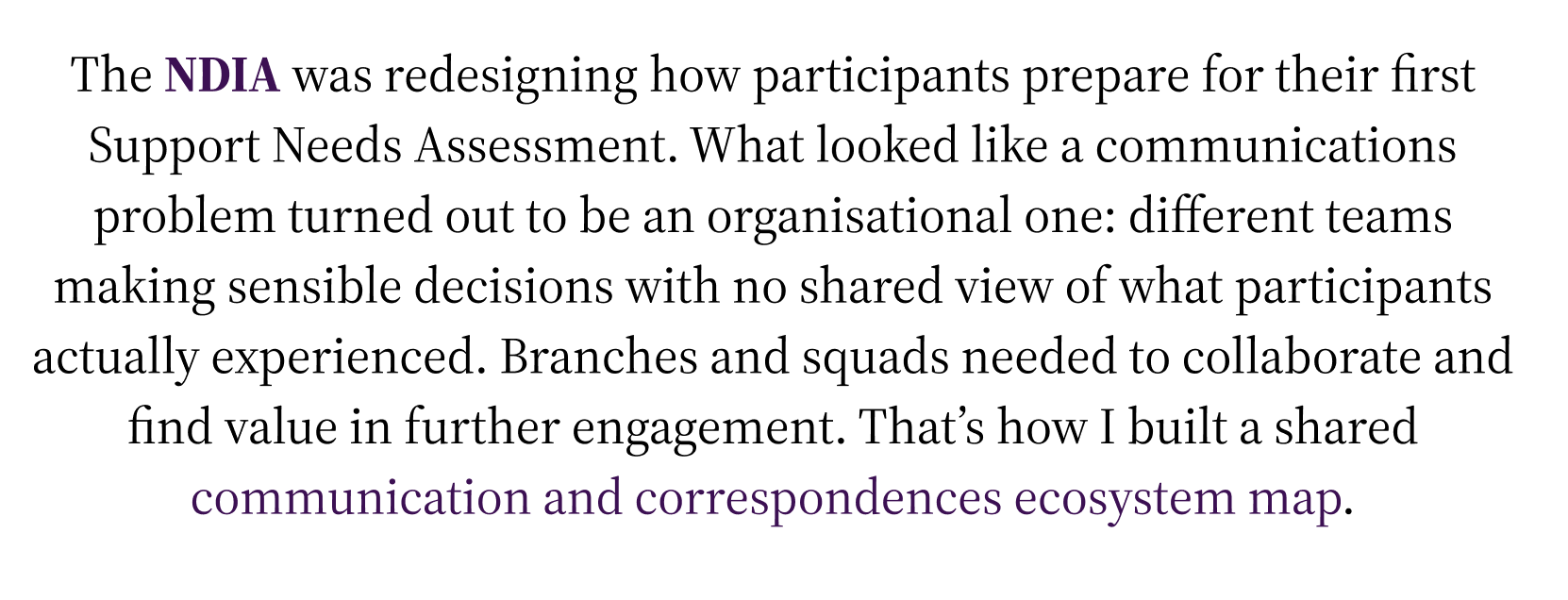
On paper, this looked like a communications problem: letters, digital content, booking information, preparation resources. As the work progressed, though, a different pattern showed up. Different teams were each making sensible decisions, yet participants still experienced the journey as fragmented. It wasn't that any individual artefact was poor. It was that every artefact reflected the perspective of whichever part of the organisation had produced it.
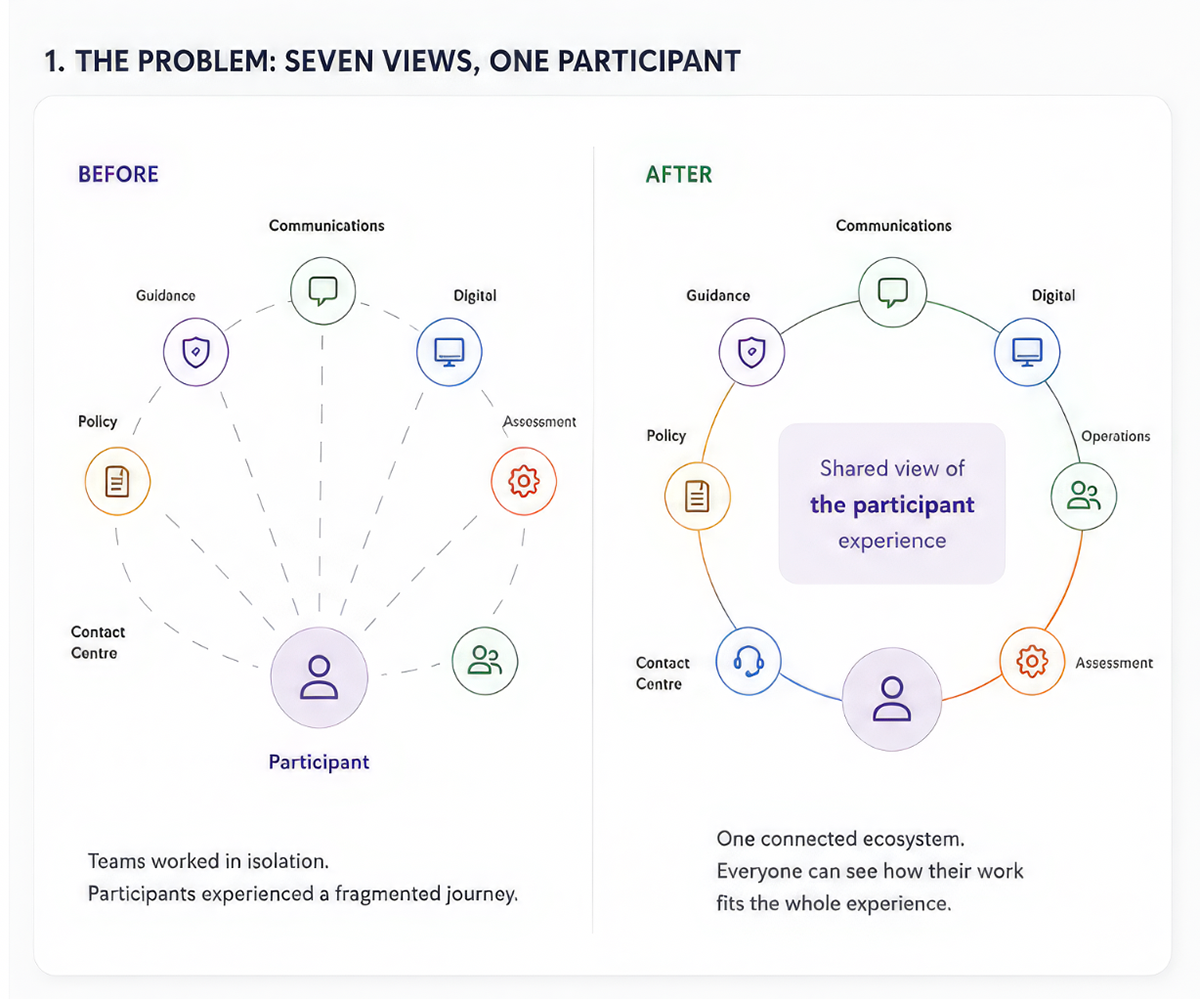
Communications, policy, digital, operations, guidance, contact centres and assessment teams each owned a legitimate piece of the experience. Nobody owned the view of how those pieces fit together for the person actually going through it.
On paper, this looked like a communications problem: letters, digital content, booking information, preparation resources. As the work progressed, though, a different pattern showed up. Different teams were each making sensible decisions, yet participants still experienced the journey as fragmented. It wasn't that any individual artefact was poor. It was that every artefact reflected the perspective of whichever part of the organisation had produced it.
Communications, policy, digital, operations, guidance, contact centres and assessment teams each owned a legitimate piece of the experience. Nobody owned the view of how those pieces fit together for the person actually going through it.
THE REFRAME
What that meant for the work
So what were we actually solving for?
Improving individual touchpoints would have made them better, one at a time — but it wouldn't have touched the underlying problem, because every team would keep designing within its own boundaries regardless.
The real task was helping people see the service the way participants experienced it, not the way the organisation happened to be structured. That reframe ended up shaping almost every decision that followed.
So what were we actually solving for?
Improving individual touchpoints would have made them better, one at a time — but it wouldn't have touched the underlying problem, because every team would keep designing within its own boundaries regardless.
The real task was helping people see the service the way participants experienced it, not the way the organisation happened to be structured. That reframe ended up shaping almost every decision that followed.
MAKING IT VISIBLE
Building a shared view of the service
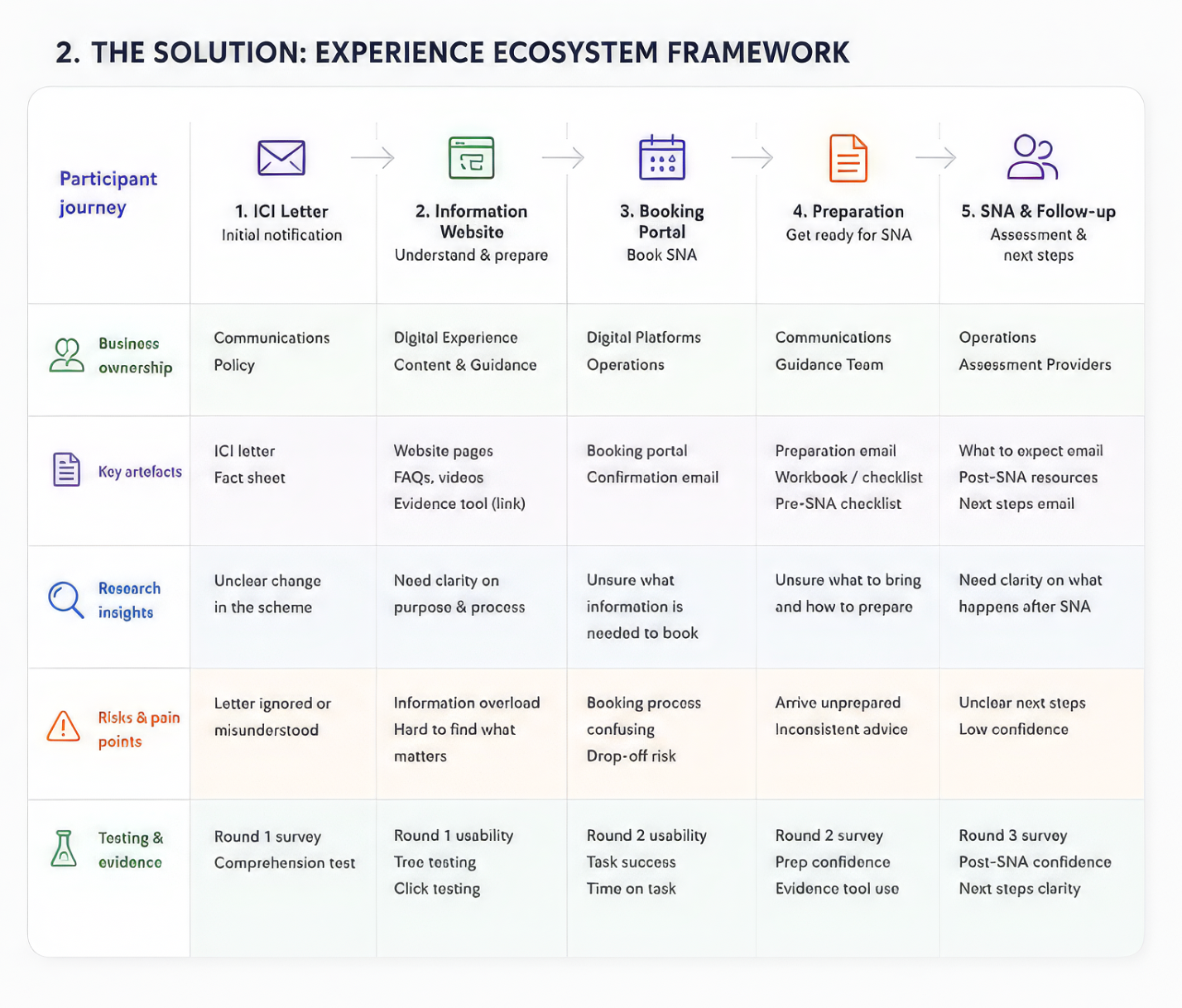
To support that shift, I built a communication ecosystem mapping how participant communications, digital channels, operational processes and service touchpoints connected across the end-to-end preparation journey.
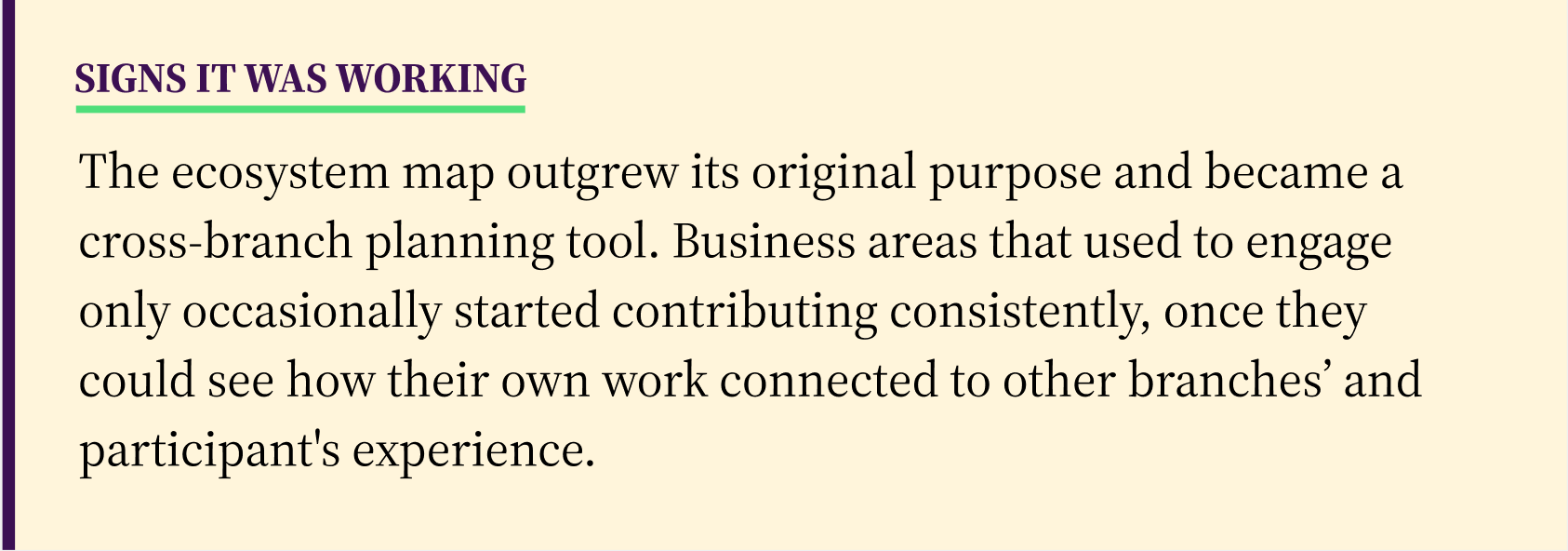
It started as something to help my own team see dependencies. It didn't stay that small for long. Once colleagues from other branches began pulling it into their own planning conversations, it turned into a common reference point for discussions that used to happen separately, inside separate business areas.
Instead of talking about a letter, a webpage or a process in isolation, teams could see how their own decisions rippled into the wider participant journey — where responsibilities overlapped, and where participants were most likely to get stuck or lost. Conversations moved away from individual deliverables and toward the service as a whole.
To support that shift, I built a communication ecosystem mapping how participant communications, digital channels, operational processes and service touchpoints connected across the end-to-end preparation journey.
It started as something to help my own team see dependencies. It didn't stay that small for long. Once colleagues from other branches began pulling it into their own planning conversations, it turned into a common reference point for discussions that used to happen separately, inside separate business areas.
Instead of talking about a letter, a webpage or a process in isolation, teams could see how their own decisions rippled into the wider participant journey — where responsibilities overlapped, and where participants were most likely to get stuck or lost. Conversations moved away from individual deliverables and toward the service as a whole.
THE REDESIGN
Designing a more personalised preparation experience
With the wider picture in view, the individual pieces got easier to design, because each one could be considered against the whole journey rather than as its own artefact. The programme covered participant letters, website content, booking pathways and preparation resources, all aimed at helping people understand what would happen next and how to get ready for their assessment.
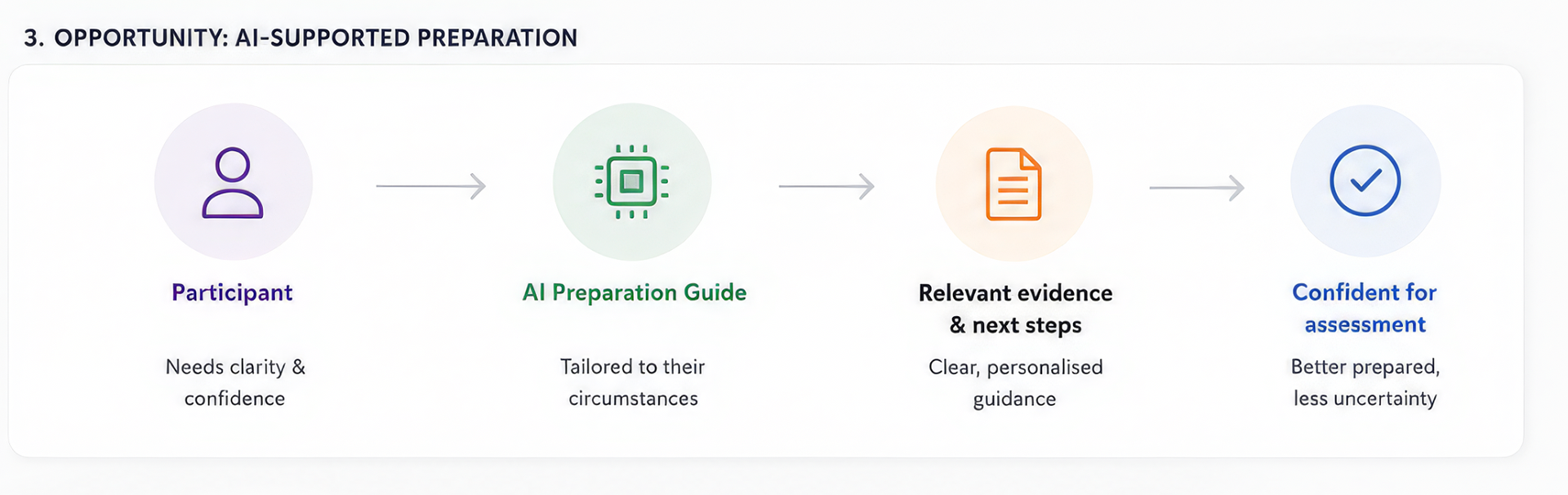
One initiative I particularly enjoyed looked at how AI could support that preparation. Generic guidance has to stay broad enough to apply to everyone, which in practice meant participants often got information that didn't apply to them, or were left unsure what evidence would actually support their specific circumstances. Working with policy and service teams, I helped shape an approach where AI could generate preparation guidance tailored to someone's disability, support needs and circumstances — helping them understand what information was likely to matter before their assessment even started.
The goal was never to replace professional judgement. It was to cut down uncertainty and give participants a bit more confidence walking in.
With the wider picture in view, the individual pieces got easier to design, because each one could be considered against the whole journey rather than as its own artefact. The programme covered participant letters, website content, booking pathways and preparation resources, all aimed at helping people understand what would happen next and how to get ready for their assessment.
One initiative I particularly enjoyed looked at how AI could support that preparation. Generic guidance has to stay broad enough to apply to everyone, which in practice meant participants often got information that didn't apply to them, or were left unsure what evidence would actually support their specific circumstances. Working with policy and service teams, I helped shape an approach where AI could generate preparation guidance tailored to someone's disability, support needs and circumstances — helping them understand what information was likely to matter before their assessment even started.
The goal was never to replace professional judgement. It was to cut down uncertainty and give participants a bit more confidence walking in.
REFLECTION
This programme changed how I think about service design.
Earlier in my career, I assumed better services came from designing better touchpoints. I still think those interactions matter — but this experience showed me they're usually the visible result of something deeper. When people across an organisation genuinely understand what experience they're trying to create together, better touchpoints tend to follow on their own. Polishing isolated artefacts rarely moves the needle if the organisation behind them is still pulling in different directions.
That's become one of the more important lessons in how I work. These days, I spend nearly as much time designing the conditions that let good services happen as I do designing the services themselves.
Earlier in my career, I assumed better services came from designing better touchpoints. I still think those interactions matter — but this experience showed me they're usually the visible result of something deeper. When people across an organisation genuinely understand what experience they're trying to create together, better touchpoints tend to follow on their own. Polishing isolated artefacts rarely moves the needle if the organisation behind them is still pulling in different directions.
That's become one of the more important lessons in how I work. These days, I spend nearly as much time designing the conditions that let good services happen as I do designing the services themselves.
